

Some memories arrive with fireworks. The ones that stay usually enter on softer feet.
We Don’t Remember Life as a Timeline, but as Feeling

People often assume that meaning comes from scale: the wedding, the promotion, the move across the country, the once-in-a-lifetime trip. Yet human memory does not work like an accountant tallying the largest events and filing the rest away as minor expenses. It works more like a storyteller, selecting moments of feeling, contrast, tenderness, surprise, and closure. That is one reason the little things gain power over time. They are often emotionally precise, and precision tends to outlast spectacle.
Psychology has been saying this for years. Research on the peak-end rule, associated with Daniel Kahneman and later explored widely across health and behavioral science, shows that people do not remember experiences by averaging every minute equally. Instead, memory is shaped disproportionately by emotionally intense moments and by how an experience ends. More recent reviews in medical and mental health contexts have continued to show how strongly recollection can bend toward these defining points. In everyday life, that helps explain why a long vacation may later be represented in your mind by a five-minute laugh in a hotel hallway, a shared dessert after a difficult day, or the final quiet drive home.
That principle becomes even more important in close relationships. A 2024 study in the Journal of Social and Personal Relationships found that recalling positive shared memories can increase feelings of intimacy. The finding sounds simple, but its implications are profound: meaning accumulates not only because events happen, but because small moments become emotionally reusable. They are revisited, retold, and reinterpreted. A partner remembering how you brought soup when they were sick, or how you squeezed their hand before a hard conversation, is not recalling trivia. They are recalling evidence.
This is also why ordinary family scenes become sacred in hindsight. The child who remembers the made-up bedtime song instead of the expensive birthday party is not being sentimental by mistake. They are revealing how attachment works. Warmth is usually delivered in repeatable forms: the note tucked into a lunchbox, the extra minute spent listening, the familiar joke that lowers the temperature in the room. Large events announce importance in the moment. Small acts earn importance later, when memory decides what truly meant safety, love, delight, or belonging.
Repetition Turns Small Acts into Identity
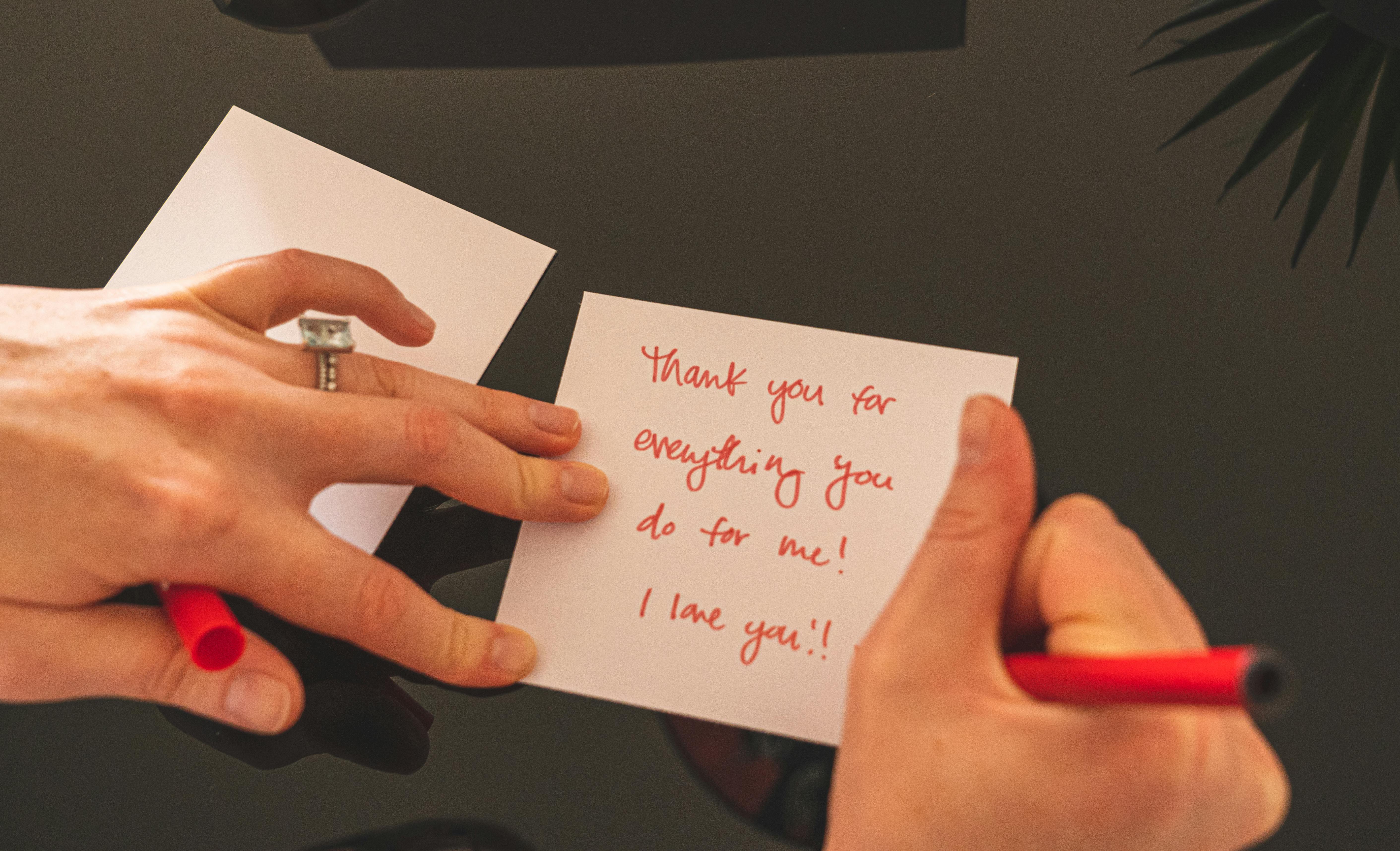
A single grand gesture can impress us, but repeated small acts shape what we believe about a person, a family, a friendship, or even ourselves. This is the quiet force of accumulation. One compliment may brighten an afternoon. Years of thoughtful attention create a marriage. One encouraging message may feel nice. Consistent encouragement can alter someone’s confidence, ambition, and sense of worth. The little things matter over time because they do not stay little; they gather pattern, and pattern is what people trust.
Long-running work from the Harvard Study of Adult Development has reinforced a related truth: warm relationships are among the strongest predictors of long-term health and well-being. That conclusion is often quoted because it is durable, but it is also frequently misunderstood. Warm relationships are not built out of abstract love alone. They are built out of daily behaviors that communicate reliability. Eye contact at the dinner table. A calm tone in disagreement. Remembering the doctor’s appointment. Asking, and really waiting for, the answer. Over decades, these gestures become the architecture of closeness.
The same logic appears in habit research and gratitude research. Studies summarized in medical and psychology literature have shown that small, simple behaviors are easier to repeat and more likely to become automatic, especially when anchored to existing routines. Gratitude practices, for example, have been associated with better well-being and even better sleep in some studies. What matters here is not that one grateful thought transforms a life overnight. It is that repeated attention changes perception. People begin to notice what sustains them. They become more fluent in appreciation, and appreciation is one of the surest ways to keep life from blurring into entitlement.
Workplaces offer a practical case study. Gallup’s global workplace research has repeatedly shown that recognition, connection, and a sense that someone cares are tied to engagement and well-being. In real terms, that often means the manager who remembers a new employee’s first difficult week, the colleague who sends the follow-up note, the leader who notices effort before crisis forces attention. Institutions tend to celebrate strategy, scale, and transformation. But morale is usually decided in microclimates. Culture is not only what a company announces. It is what people experience in the smallest exchanges, over and over, until those exchanges become the place’s emotional reputation.
Time Reveals What Was Quietly Holding Everything Together

The most powerful argument for the importance of little things is that we usually notice them fully only after time has passed. Loss clarifies this with almost cruel efficiency. When people grieve, they may miss the sound of a familiar key in the door, the way someone folded towels, the habitual text that arrived at 8:12, the phrase that was repeated so often it once seemed unremarkable. What is gone is not merely a person or a period. What is gone is an entire ecosystem of small certainties. We mourn details because details were carrying love in its most livable form.
The same retrospective illumination happens without grief. Parents suddenly realize that the years were made not mainly of holidays and school ceremonies, but of morning routines, backseat conversations, and the nightly ritual of turning off the hall light. Friends understand, after moving apart, that the friendship lived as much in ordinary presence as in milestone celebrations. Even personal identity follows this pattern. A life is rarely changed by one dramatic declaration alone. It is more often shaped by modest recurring choices: taking the walk, making the call, saving a little money, reading a few pages, apologizing quickly, showing up again.
Recent research on savoring adds another layer to this idea. Studies in adulthood and aging have found that savoring the present moment is associated with positive emotion and well-being, especially in daily social life. In plain terms, people who notice good moments while they are happening tend to live with a richer sense of having lived. That does not mean every day becomes extraordinary. It means the ordinary stops passing through unnoticed. A cup of coffee in a quiet kitchen, a joke exchanged in a doorway, sunlight on a familiar street: these are not filler between important events. They are the substance from which a meaningful life is made.
That may be the deepest reason little things end up meaning the most over time. They are where values become visible. Anyone can admire love, loyalty, generosity, or tenderness in theory. The little things are where those ideals take physical form. They become a coat placed over someone’s shoulders, a name remembered, a patient answer, a chair pulled closer, a habit of kindness maintained when no audience is present. Time strips away performance and leaves pattern. In the end, we are not held together by the highlights alone. We are held together by the tiny repeated proofs that we were cared for, that we paid attention, and that we were really here.