
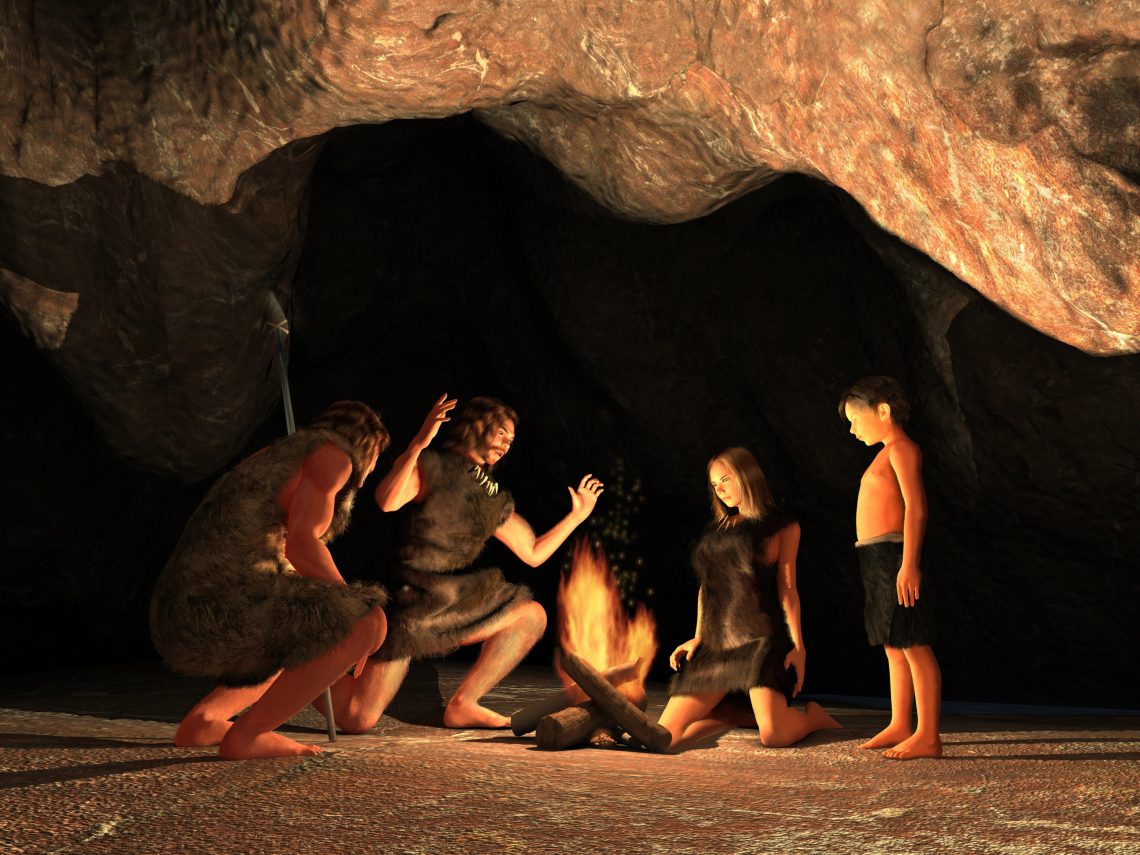
For years, researchers have puzzled over what ultimately led to the Neanderthals’ disappearance, but a compelling new study is challenging everything we thought we knew. Researchers from Italy and Switzerland now argue that these ancient humans never experienced a genuine extinction, pointing to the survival of their genetic material within living people as their key evidence. Through a process of gradual interbreeding spanning as few as 10,000 years, our own species, Homo sapiens, merged with Neanderthals through repeated mating, slowly absorbing them into our lineage.
“Our results highlight genetic admixture as a possible key mechanism driving their disappearance,” the researchers write. Rather than a sudden end, they describe the process as “genetic dilution” — a slow fading rather than a definitive death.
Neanderthals, known scientifically as Homo neanderthaliensis, roamed Europe and Western Asia for roughly 360,000 years before vanishing around 40,000 years ago. Their intimate connection to modern humans is no longer a theory — Neanderthal DNA has been confirmed in the genomes of people alive today, with most non-African individuals carrying between one and two percent Neanderthal ancestry.
The two species coexisted for thousands of years following Homo sapiens’ migration out of Africa between 60,000 and 70,000 years ago. Upon reaching Eurasia, our ancestors encountered Neanderthals for the first time. Early communication likely existed between them — rudimentary language or verbal signals possibly bridging the gap. Despite notable physical contrasts, including the Neanderthals’ broad nasal structure, prominent brow ridges, and compact, heavyset frames, the two groups were drawn together by basic biological instincts.
Their offspring were healthy and viable, a testament to how genetically close the two species actually were — a closeness that explains why traces of Neanderthal DNA persist in us today.
This interbreeding continued for approximately 7,000 years before Neanderthal populations began their slow decline. The precise reasons behind this decline “remain a subject of intense debate,” according to the study’s authors. “Evidence indicates that Neanderthal extinction was a gradual phenomenon, with the loss of local populations at different times,” explains the team, headed by Andrea Amadei of the University of Rome Tor Vergata.
Using a mathematical model, the researchers examined the long-term effects of repeated, small-scale migrations of Homo sapiens into Neanderthal-inhabited regions of Eurasia. Their findings indicate that sustained interbreeding resulted in complete genetic absorption within a window of 10,000 to 30,000 years. Each wave of incoming Homo sapiens introduced what the team describes as “genetic perturbations” — gradual disruptions that slowly diluted the Neanderthal genetic identity.
A key factor in this imbalance was sheer population size. Neanderthal communities numbered only in the thousands, leaving them numerically overwhelmed by the far larger Homo sapiens populations steadily moving into their territory.
“Sustained gene flow from a demographically larger species could account for Neanderthals’ genetic absorption into modern humans,” the researchers note. While they acknowledge that environmental pressures may have played a supporting role, they argue that the continued presence of Neanderthal DNA in modern humans makes calling this a true extinction scientifically questionable, at least from a genetic standpoint.
Published in Scientific Reports, the study frames this gradual merging as one of the most significant turning points in all of human evolutionary history. It also pushes back against theories suggesting a dramatic climatic catastrophe wiped Neanderthals out in a sudden event.
“Genetic admixture can provide another robust explanation for the observed Neanderthal demise, but does not exclude that other factors may have played a substantial role,” the team concludes, calling for future research that combines both genetic analysis and archaeological findings.
Not all contact between the two species was peaceful, however. Physical evidence — including tool marks on ancient skulls and signs of weapon use — points to episodes of violent conflict. Competition for territory, food, and other essential resources may have added further pressure on already-shrinking Neanderthal communities, accelerating their ultimate disappearance from the world stage.