
Myths, ancient scriptures, and oral traditions passed down through generations have long spoken of giants walking among early humans. What’s surprising is that physical evidence — though disputed — may lend some weight to these age-old stories.
A remarkable set of human remains was uncovered in the American state of Nevada, with early reports claiming certain individuals reached heights well above the average. Beyond their reportedly unusual size, several of these bodies — some in a preserved, mummified state — were noted to have had distinctly reddish hair. Scientists, however, caution that hair pigment is chemically unstable after death, and that soil conditions and temperature can naturally turn very dark ancient hair a rusty-red color over centuries.
These discoveries threw fuel onto a centuries-old theory that a now-vanished race of humans once held dominance over the southwestern corner of North America.
The Paiute people, a tribe with deep roots in the Nevada region stretching back thousands of years, carried stories of flesh-eating, red-haired giants they called the Si-Te-Cah. These beings, according to Paiute tradition, arrived in the Americas from a faraway island, crossing vast ocean waters on rafts woven from reeds. They quickly earned a reputation for being taller, physically stronger, and far more brutal than any ordinary human.
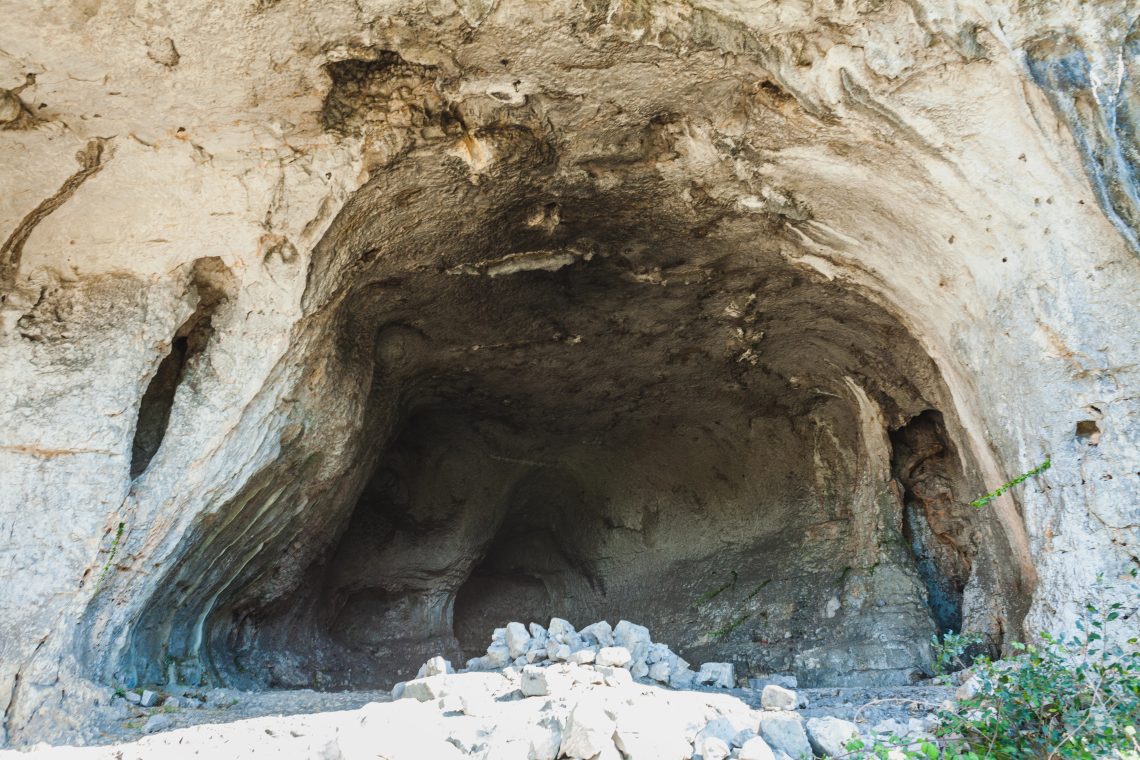
Then came 1911. Workers digging for bat guano — a substance prized for its use in fertilizer — inside a cave near Lovelock, Nevada, began pulling up a series of unusual and unsettling objects from the earth.
Their findings triggered two formal archaeological excavations, one in 1912 and another in 1924, which together produced thousands of recovered artifacts. Among the finds were human remains that would later be popularly nicknamed the Lovelock Giants — though their actual heights remain a point of serious scientific debate, with mainstream anthropologists concluding the individuals were of above-average but not extraordinary stature.
Excavators also brought to light sandals measuring 15 inches in length that showed clear signs of regular use, as well as a large rock bearing what appeared to be an oversized handprint etched into its surface.
Not long after the second dig concluded, a 1931 report in the Nevada Review-Miner newspaper described the discovery of two more large skeletons in a dried-out lake bed near Lovelock, with claimed heights of 8.5 and 10 feet. These figures, reported by a newspaper rather than peer-reviewed archaeology, have never been independently confirmed and should be treated as unverified accounts rather than established fact.
As extraordinary as all of this sounds, accounts of similarly oversized beings appear across the entire length of the Americas.
In the 1500s, Spanish chronicler Pedro Cieza de León documented a Peruvian legend about the origins of giants. His written record described towering figures arriving by sea on reed vessels, with some individuals reportedly so tall that the distance from their knee to the ground equaled the full height of an average man.
High in the Andes mountain range, straddling the border between Peru and Bolivia, skulls with unusual elongated shapes and skeletal remains larger than typical have been uncovered. Estimated at roughly 3,000 years old, some of these specimens were also found with reddish-colored hair — a detail that, again, scientists largely attribute to the chemical effects of the burial environment over time.
As for what ultimately ended such a feared people — if they existed at all — the Paiute oral tradition offers a clear answer.
The Si-Te-Cah, according to this tradition, were relentless aggressors who terrorized every tribe in their path. After enduring years of raids and bloodshed, the surrounding tribes set aside their differences and formed a united front. Driven back and cornered, the last of the Si-Te-Cah retreated into Lovelock Cave. The allied tribes ignited a fire at the cave’s entrance, trapping those inside.
Notably, when archaeologists first entered that same cave in 1911, they found clear physical evidence of intense burning concentrated around its entrance — a detail that aligns with the Paiute account in a genuinely intriguing way.
Whether these giants were real beings or the product of vivid storytelling passed across generations, there’s something undeniably compelling about the moment all the threads of this story come together — even if science asks us to hold the most dramatic claims lightly.