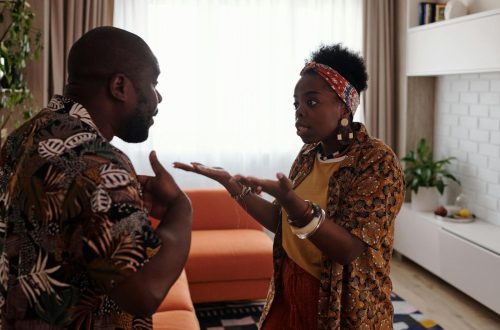

Every couple walks their own path through love and marriage. And just as falling in love feels different for everyone, so does falling out of it. But what truly becomes the breaking point? From clashing lifestyles to broken trust, marriages unravel for countless reasons. Yet researchers have discovered that certain patterns tend to repeat themselves across different cultures and generations. Here’s what they found.
Financial problems
Money troubles — whether it’s struggling to pay the bills or watching a partner spend beyond their means — put enormous strain on a marriage.
If you constantly find yourself covering your spouse financially, it may signal that they haven’t quite grasped what financial responsibility looks like.
Lack of intimacy
Both physical and emotional closeness are at the heart of a strong, fulfilling marriage. While no couple can sustain that early rush of passion forever, intimacy shouldn’t simply vanish over time.
It also shows up in smaller moments — a kind word, a thoughtful gesture. When those quietly disappear, the relationship can begin a slow and painful decline.
Infidelity
An affair is perhaps the most obvious reason a marriage falls apart. Surprisingly though, some couples do survive it. But cheating fundamentally rewires the relationship — it chips away at trust and shuts down open communication, often pushing couples toward divorce regardless.
Domestic violence
Abuse in a marriage isn’t limited to physical harm. It’s any repeated pattern of behavior used to dominate or control a partner.
This can show up as constant blame-shifting, intimidation tactics, emotional manipulation, or cutting someone off from their support network.
Lack of compatibility
The saying goes that opposites attract — but shared ground is what keeps people together. Without common interests, couples either drift into separate lives or quietly sacrifice their own passions to keep the peace.
Over time, that kind of imbalance builds resentment and quietly erodes the connection between two people.
Substance abuse and addiction
Whether it’s alcohol, drugs, or gambling, addiction destabilizes the entire household.
It tends to drag other problems along with it — financial hardship, emotional damage, explosive arguments, and in some cases, physical danger.
Physical appearance
It may seem superficial, but shifts in physical appearance genuinely do push some marriages to their end.
These changes can affect intimacy, self-confidence, and overall wellbeing in ways that quietly but significantly reshape how two people relate to each other.
Communication problems
Few things predict divorce more reliably than a breakdown in communication. When couples stop talking effectively, misunderstandings pile up and problems go unsolved.
What should be a conversation becomes a confrontation — and over time, those confrontations hollow out the love, respect, and closeness that once held the marriage together.
Marrying too young
Many divorcing couples admit they simply weren’t ready when they walked down the aisle. Divorce rates peak among people in their 20s, and nearly half of all marriages that end do so within the first decade.
Younger couples often haven’t yet developed the emotional tools needed to navigate conflict with patience and maturity — and that gap can prove too wide to bridge.
Getting married for the wrong reasons
Some people enter marriage carrying a romanticized picture of what it should look like — and when reality sets in, the disappointment can be devastating.
Attraction and infatuation can blind people to genuine incompatibilities, turning what seemed like a perfect match into something far more complicated.
Lack of equality and identity
Red flags around inequality often appear early — one partner making all the decisions, or different rules applying to each person.
As time goes on, individuals can lose their sense of self within the marriage, and these imbalances tend to grow sharper once children enter the picture.
Too much arguing and conflict
Disagreements are a natural part of any relationship, and a difference of opinion isn’t automatically a problem. But when arguments become constant and resolution feels impossible, the relationship starts to crack under the weight.
Unrealistic expectations
Disagreements over where to live, how to manage the home, or even basic standards of respect are frequent triggers for divorce.
Assuming that marriage will automatically fix existing problems is itself a warning sign — one that often leads to expectations going painfully unmet.
Mismatched values
Opposing views on religion, culture, politics, gender, or sexuality carry more weight in a marriage than most people anticipate.
When a couple’s core values pull in opposite directions, the relationship can quickly move from tension to full-blown crisis.
Lack of family support
When family members disapprove of the marriage or the partner, it can leave a couple feeling isolated and unsupported.
That outside pressure, if left unaddressed, can quietly wear down even a committed relationship — and eventually become impossible to carry together.
Sources: Psych Central, Psychology Today