
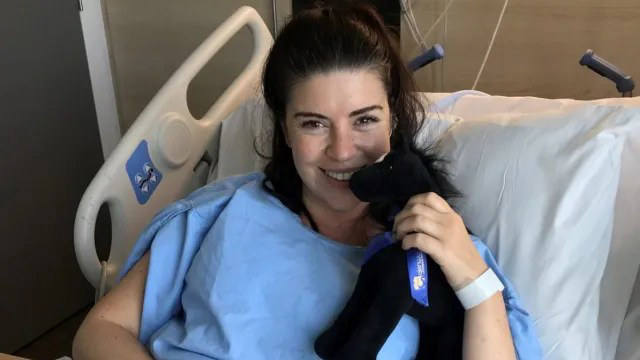
Marriage vows promise loyalty through illness and health — but research suggests that promise hits differently depending on who falls ill. A major study out of the University of Florence examined roughly 25,000 heterosexual couples over 50 spanning 27 European nations, and the findings are as uncomfortable as they are revealing. Couples where the wife was dealing with serious health challenges were 60% more likely to separate compared to healthier pairs. Strikingly, a husband’s poor health showed no comparable effect on relationship stability.
This pattern isn’t unique to Europe. Research published in The Cancer Journal found that American couples were six times more likely to divorce when the wife — not the husband — received a cancer diagnosis and underwent treatment. In South Korea, men were found to be four times more likely to walk away from an ill spouse.
Treating the Finish Line as the Exit Door
Cancer support communities online tell a brutal story. Threads like “How do I break up with my girlfriend who has cancer?” and “My wife has been in treatment five years — I want out” aren’t rare. They’re disturbingly common.
The Bounce-Back Myth
Here’s where it gets even thornier: the abandonment often doesn’t happen during treatment — it happens after. According to research, many women hit their lowest point precisely when the world expects them to be celebrating recovery. Fatigue, mental health struggles, and a shattered sense of identity tend to surface once the clinical schedule disappears.
Sian Robinson-Brown, a cancer information and support knowledge specialist at Macmillan Cancer Support, notes that the end of active treatment can blindside couples far more than the diagnosis itself. When every hour had been structured around appointments and care routines, the sudden silence can make everything feel overwhelming.
Kate — a consumer research executive based in Australia — knows this firsthand. When her cancer diagnosis arrived, her then-husband redirected his energy toward the children and his career rather than toward her. He took barely two or three days off during her entire treatment period. “I felt very alone and unsupported,” she recalls.
When Cancer Hits the Wallet Too
The financial dimension is where things get truly devastating. Kate had already taken an income hit from being the primary caregiver for her children. Cancer compounded that — temporarily sidelining her professional focus entirely. And while the NHS covers most cancer treatment in the UK, the ripple costs are real: physiotherapy, hormonal treatments with brutal side effects, ongoing mental health support.
Post-divorce, UK women typically see their income fall at roughly twice the rate of men. Stack cancer’s hidden costs on top of that, and the long-term financial picture for women becomes genuinely alarming.
For Kate, the diagnosis arrived during an already bruising chapter — grieving her mother, supporting an aging father, raising young children. The marriage had seemed solid before. But the pressure exposed its fractures.
Timing Is Everything
Ammanda Major, clinical quality director for Relate at Family Action, points out that a mid-life diagnosis carries its own particular weight. It tends to arrive exactly when people are already quietly asking themselves whether their lives are on the right track — making an already volatile moment even more combustible.
The gender disparity in cancer diagnoses adds another layer of irony: according to Cancer Research UK, more men than women are diagnosed with cancer overall. Yet it’s women’s marriages that appear to crumble more frequently under the strain of illness. The uncomfortable explanation? Men simply aren’t socialized into caregiving the way women are. In the UK, over 10% of women are engaged in unpaid care at any given time, compared to around 7% of men.
Kate’s research uncovered something particularly painful: several women had nursed their male partners through cancer or serious injury — only to be abandoned by those same partners when they themselves fell ill with breast cancer.
The Wake-Up Call Nobody Asked For
One woman in the research was told point-blank that her cancer was making her partner’s life “a misery.”
The University of Florence researchers suggest that entrenched gender roles — husband as breadwinner, wife as homemaker — quietly reinforce unequal power dynamics that only become visible under crisis.
But the story isn’t entirely one of women being left. Many, it turns out, do the leaving themselves. Going through cancer can trigger something of a personal reckoning — a sudden, sharp clarity about what life is worth living for. Multiple women in Kate’s research said the experience made them realize they wanted something entirely different. Others admitted they were ultimately relieved their partners had gone.
Ammanda has seen this repeatedly in her clinical work: a brush with mortality can function as a kind of awakening, prompting people to reimagine their lives from the ground up.
The Other Side
Family lawyer Alex Carruthers of Hughes Fowler Carruthers has handled numerous post-recovery divorce cases. His observation? While the diagnosed wife is often the one being left, she’s also — more often than not — the one who ultimately files.
Still, Sian urges against writing off every relationship that faces a health crisis. The data has a warmer side too: in Kate’s research, twice as many couples reported that their relationship had actually improved after cancer.
“Cancer has a way of sorting people,” Kate reflects. “It’s been called the ‘cancer colander’ — it strains out the relationships and people that don’t hold up, and leaves behind what’s genuinely good. My own marriage didn’t survive. But the kindness I encountered from others? That genuinely astonished me. And that, strange as it sounds, is one of the few real upsides.”
Source : Originally reported by iNews UK