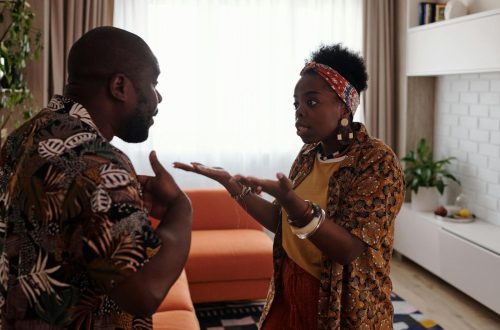

Beneath every relationship question — every quiet frustration, every late-night conversation, every moment of feeling unseen — there’s often the same underlying wish: to truly understand and be understood by the person you love. What women want from their partners isn’t a mystery buried in biology or pop psychology. It’s something relationship researchers and therapists have been documenting for decades, and the findings are more grounded, more human, and more attainable than most people expect.
Emotional availability, not just physical presence
One of the most consistent findings in relationship research is that women rate emotional connection as a primary driver of relationship satisfaction — often above practical support or physical affection alone. Being in the same room isn’t the same as being present. Women frequently describe feeling loneliest not when they’re alone, but when they feel emotionally invisible to their partner.
Dr. John Gottman, whose decades of research at the University of Washington produced some of the most cited findings in couples psychology, found that what distinguishes lasting relationships from struggling ones often comes down to a partner’s willingness to “turn toward” bids for connection — those small, everyday moments when someone reaches out for attention, humor, or support. Ignoring or dismissing these bids, even unintentionally, erodes emotional intimacy over time.
A practical starting point: when your partner shares something — a worry, a funny observation, a piece of their day — respond with genuine curiosity rather than a quick fix or a distracted “mm-hmm.” Ask a follow-up question. That simple habit, practiced consistently, signals that her inner world matters to you.
Respect that shows up in the small things
Respect in a relationship isn’t just about avoiding contempt during arguments. It’s woven into the fabric of daily life — how decisions get made, whose time is treated as valuable, and whether a partner’s opinions feel genuinely considered. Research published in the Journal of Marriage and Family has found that perceived respect from a partner is one of the strongest predictors of relationship satisfaction for women across age groups and relationship lengths.
This is partly why many women identify the division of household labor and mental load as deeply meaningful issues, not logistical complaints. When one partner consistently manages the invisible work of a household — remembering appointments, anticipating needs, coordinating family schedules — without acknowledgment, it communicates an imbalance that can quietly breed resentment.
The actionable shift here isn’t about scorekeeping. It’s about noticing. Ask what you might be missing. Approach domestic life as a shared project rather than a task list to be delegated or avoided.
Feeling genuinely heard during conflict
Most couples fight. What separates healthy partnerships from distressed ones isn’t the absence of conflict — it’s how conflict gets handled. Gottman’s research identifies contempt (eye-rolling, dismissiveness, sarcasm intended to wound) as the single strongest predictor of relationship breakdown. In contrast, couples who approach disagreements with curiosity and goodwill tend to repair more quickly and feel closer afterward.
Women commonly report that what they want most during an argument isn’t necessarily to “win” — it’s to feel heard. This maps closely to what therapists trained in Emotionally Focused Therapy (EFT), developed by Dr. Sue Johnson, describe as a need for secure attachment: the reassurance that even in conflict, the relationship is safe and the partner is still an ally.
A concrete technique from EFT: before defending your own position in an argument, try reflecting back what you heard your partner say — not to agree, but to confirm you understood. “It sounds like you felt overlooked when I didn’t ask your opinion. Is that right?” This small act of validation can de-escalate tension faster than almost any counterargument.
Appreciation that goes beyond the grand gesture
Romantic gestures — anniversaries, surprises, declarations of love — matter. But relationship psychologists consistently find that it’s the frequency of small appreciations, not the scale of occasional ones, that sustains emotional intimacy over time. Gary Chapman’s widely recognized love languages framework reminds us that people receive love differently: some through words of affirmation, others through acts of service, quality time, physical touch, or gifts. Understanding which language resonates most with your partner is less about following a formula and more about paying close attention to what makes her genuinely light up.
Women in long-term relationships often describe a specific kind of longing: to be seen not just as a partner fulfilling a role, but as a full, complex person whose growth, passions, and efforts are noticed and valued. This means acknowledging not just what she does for the relationship, but who she is within it.
Try this: once a week, name one specific thing you appreciate about your partner — not a task she completed, but a quality you genuinely admire. Specificity matters. “I noticed how patient you were in that difficult conversation” lands differently than a generic “you’re amazing.”
Room to be imperfect — and still loved
Attachment theory, developed by psychologist John Bowlby and expanded by researchers like Mary Ainsworth, identifies a core human need that doesn’t disappear in adulthood: the need to feel securely attached to someone who won’t withdraw love when we struggle, fail, or show our less polished selves. Women, like all people, want to know they don’t have to perform wellness or competence to remain worthy of love.
This means creating a relationship culture where vulnerability isn’t punished. Where admitting fear or exhaustion doesn’t lead to dismissal. Where apologizing and repairing are treated as signs of strength, not weakness. Secure attachment isn’t built in a single conversation — it’s built in hundreds of small moments where one partner chooses connection over criticism.
Final thoughts
What women want from their partners, at its core, isn’t so different from what most people want: to feel genuinely seen, respected, and loved by someone who shows up — emotionally, consistently, and with real intention. The research is clear that these needs aren’t unreasonable or impossible to meet. They require attention, practice, and a willingness to keep learning about the person beside you. That willingness, more than any single gesture or skill, is what makes love last.