
It sounds almost impossible — but medical experts say it isn’t entirely out of the question.
In August 2016, 17-year-old Julio Macias Gonzalez of Mexico City’s Iztapalapa borough reportedly died after suffering a sudden stroke. According to local Mexican media outlet Hoy Estado de México and subsequent reporting by The Independent (UK), doctors at the scene suspected that a hickey — or “love bite” — from his 24-year-old girlfriend may have caused the fatal sequence of events.
According to those reports, Julio had spent an evening with his girlfriend before returning home. He then began having convulsions at the family dinner table. Emergency services were called, but paramedics were unable to save him. Doctors believe the suction of the hickey resulted in a blood clot that traveled to Julio’s brain and caused a stroke. His family blamed the girlfriend for the incident; her whereabouts were subsequently reported as unknown. Time
This Was Not the First Time a Hickey Was Linked to a Stroke
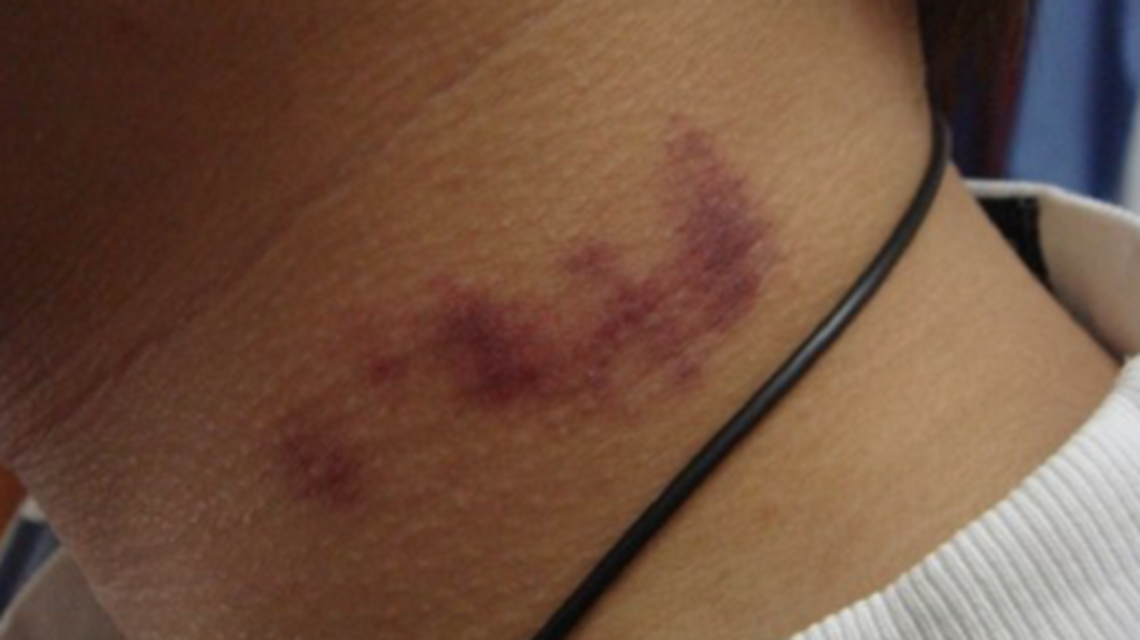
The case recalled a medically documented incident from 2010. A 44-year-old Maori woman was brought to Middlemore Hospital in Auckland, New Zealand, with a paralyzed left arm. Doctors were puzzled by her symptoms until they realized there had been a clot in an artery on the right side of her neck, beneath where she still showed the bruising of a hickey. ABC News
Dr. Teddy Wu, one of the doctors who treated her, explained the mechanism: “Because it was a love bite there would be a lot of suction. Because of the physical trauma it had made a bit of bruising inside the vessel. There was a clot in the artery underneath where the hickey was.” Wu said the clot dislodged and traveled to the woman’s heart, where it caused a minor stroke that led to the loss of movement. The case was reported in the New Zealand Medical Journal. The woman was treated with warfarin, an anticoagulant, and the blood clot disappeared over the following days. Fox NewsInternational Business Times
How Could This Happen? The Medical Explanation
Hickeys that have caused strokes have probably done so by applying pressure over one of the carotid arteries — the pair of blood vessels that run up either side of the neck and deliver blood to much of the brain. These arteries sit quite close to the surface of the neck, making them vulnerable to trauma and injury. VICE
Trauma to the carotid artery can cause a blood clot to travel to the brain, resulting in a stroke. This occurs when the inner lining of the artery wall tears, leading to a “dissection,” or separation, of the layers of the artery wall. Blood clots can form at the site of the tear, and the force of blood rushing by can dislodge the clot and push it toward the brain, causing an ischemic stroke. MedShun
Dr. Mitchell Elkind, a noted stroke neurologist at New York Presbyterian Columbia, confirmed the scenario is theoretically possible: “The carotid artery, which is one of the arteries that goes to the brain, travels through the neck. If you were to press on or otherwise damage the neck in that area where the carotid artery is going, potentially they could cause enough injury to tear the blood vessel, and cause a blood clot to form that could go to the brain and cause a stroke.” However, Dr. Elkind emphasized this would be an extremely rare event, and that parents have very little to worry about regarding hickeys and teens. CBS News
Experts Urge Caution About Drawing Firm Conclusions
Not all doctors were convinced the hickey was the definitive cause in Julio’s case. Dr. Ed Dominguez, Medical Director of Organ Transplant Infectious Diseases at Methodist Health System in Dallas and a physician with decades of experience, said the story didn’t make complete medical sense. He noted that for a hickey to cause a blood clot traveling to the brain in a 17-year-old, it would have had to form in the carotid artery — which is deeper in the neck than the jugular vein and shouldn’t be impacted by surface bruising. He also noted that 17-year-olds have a higher statistical likelihood of a blood clot traveling to the heart, not the brain. Action News 5
Dr. Charles Abrams, President of the American Society of Hematology and a hematologist at the University of Pennsylvania, also weighed in, saying that while it is not impossible for a hickey to cause a blood clot leading to a stroke, it is “incredibly unlikely.” He noted: “It has to be real trauma in order to cause an arterial clot, probably much more significant than the trauma that it takes to form a clot in a vein.” Popular Science
Dr. Robert Glatter, an emergency room physician at Lenox Hill Hospital in New York City, said that to damage an artery badly enough to cause a fatal blood clot, it would have to be what he called “the mother of all hickeys.” He added: “It’s possible this could happen, but it’s very rare, and parents should be reassured it’s not something that happens in a routine way.” IFLScience
The Bottom Line
According to a case study in the New Zealand Medical Journal, an ill-placed hickey caused a partial blockage of blood flow to the brain that led to a stroke. While cases are rare, placing extra pressure on the carotid artery does increase the risk of clotting that can lead to a stroke. The death of Julio Macias Gonzalez, if confirmed to be hickey-related, would represent the first known fatality linked to such a mechanism. Cardiovascular Business
Medical professionals recommend being aware of stroke warning signs, remembered by the acronym FAST: a drooping Face, Arm weakness, Speech difficulty, and Time to call emergency services immediately.
Sources: Hoy Estado de México; The Independent (UK); TIME; CBS News; Global News; Popular Science; New Zealand Medical Journal (case study, November 2010); VICE; IFLScience.
Note: This article is based on media reports from 2016. The exact cause of Julio Macias Gonzalez’s death was not independently verified by official medical authorities at the time of reporting.