
Thorin Oakenshield once said in J.R.R. Tolkien’s The Hobbit, “There is nothing like looking, if you want to find something. You certainly usually find something, if you look, but it is not always quite the something you were after.”
That sentiment captures perfectly what happened to paleoanthropologist Ludovic Slimak in 2015.
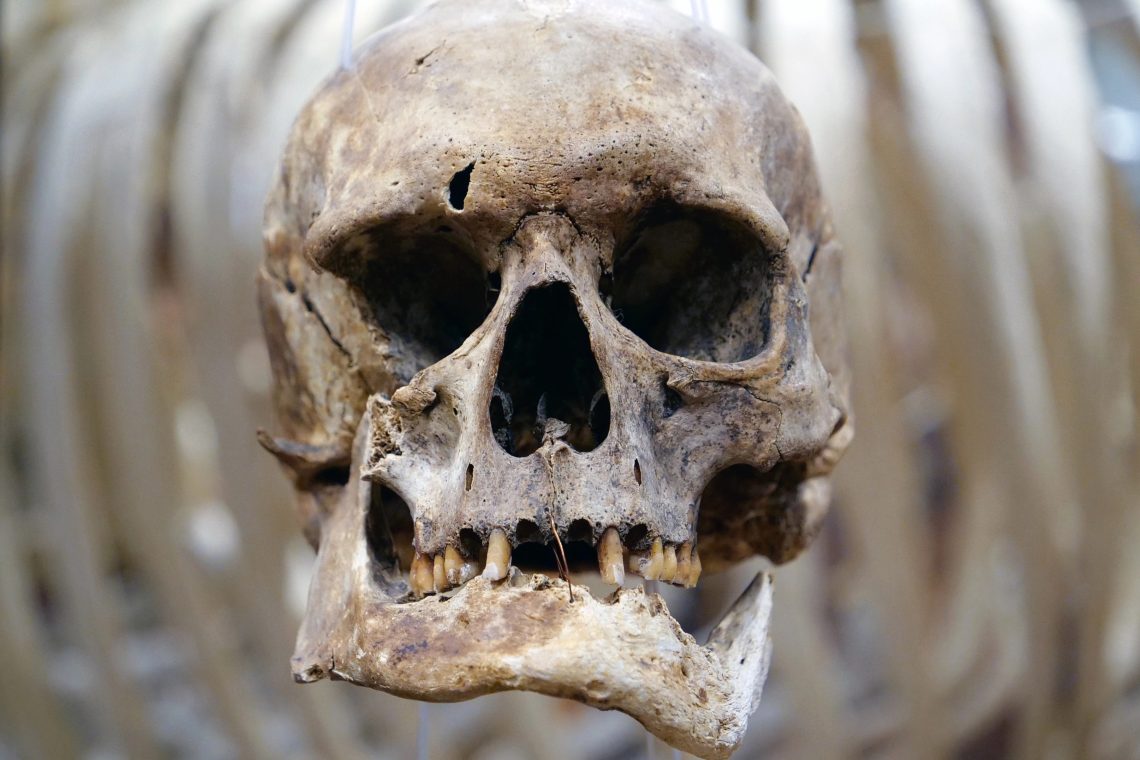
Slimak and his team had been carefully combing through Grotte Mandrin — a cave tucked into France’s Rhône Valley — since 1998. Seventeen years of painstaking fieldwork. Then, almost without fanfare, they pulled something extraordinary from the earth: a fragment of a Neanderthal’s jaw.
But the story didn’t end with a single bone.
“I began to find remnants of the Neanderthal’s jaw in 2015,” Slimak later recalled, “but each year we find one tooth, or one fragment of bone.” Piece by piece, the picture of a single ancient individual began to take shape — one who walked the Rhône Valley roughly 42,000 years ago, near the final chapter of his entire species.
Slimak named him Thorin.
The choice was deliberate. In Tolkien’s world, Thorin Oakenshield was among the last of the dwarf kings — the closing page of a royal bloodline. “Thorin the Neanderthal is also an end of lineage,” Slimak explained. “An end of a way to be human.”
To move beyond names and stories, the team needed hard science. They submitted Thorin’s remains for full genome analysis, and what came back stunned the field. Published in the journal Cell Genomics, the results revealed something almost impossible to believe: Thorin’s entire lineage had remained genetically sealed off from every other Neanderthal population for 50,000 years — despite other groups living within relatively close range.
What made the finding even more striking was that Slimak had essentially predicted it two decades earlier. Long before Thorin’s bones surfaced, he had noticed that the stone tools found in the Rhône Valley looked nothing like those being made elsewhere. The craftsmanship was older, frozen in time.
“It turns out that what I proposed 20 years ago was predictive,” he said. “The population of Thorin had spent 50 millennia without exchanging a single gene with the classical Neanderthal populations.”
The genome also showed signs of high genetic homozygosity — a biological fingerprint of inbreeding — and revealed zero evidence of interbreeding with the modern humans who shared the same era.
For Slimak, the implications stretch far beyond one cave in France. “Everything must be rewritten about the greatest extinction in humanity,” he stated plainly. “How can we imagine populations that lived for 50 millennia in isolation while they are only two weeks’ walk from each other? All processes need to be rethought.”
Thorin may be gone. But what he left behind has cracked open human history in ways nobody saw coming