


Throughout history, certain designs have transcended their original purpose and era to become enduring case studies in engineering brilliance. Long before digital modeling software, supercomputers, and modern construction equipment, ancient and early industrial engineers relied on mathematics, experimentation, and deep observation of nature to solve problems of enormous complexity. The structures and systems they created were not just functional; they were optimized, resilient, and remarkably efficient. Many of them continue to operate or stand strong for centuries, even millennia, later. These designs are remarkable for their smart use of materials and structural efficiency. Engineers still study them to learn timeless principles that remain relevant in modern infrastructure.
1. The Roman Aqueducts
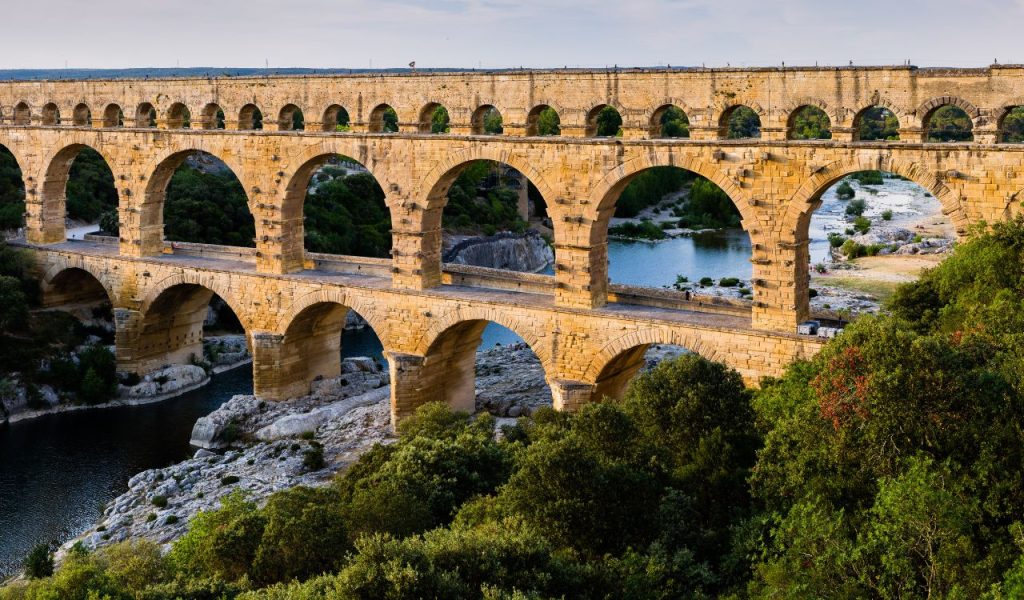
The Roman aqueducts stand as one of the most influential achievements in civil engineering history. Beginning in 312 BCE, these water systems transported fresh water across vast distances to supply cities, baths, fountains, and agricultural areas. What makes them extraordinary is the precision with which Roman engineers maintained a steady gradient, sometimes dropping only a few centimeters per kilometer to ensure a continuous gravity-driven flow. Using gravity and precise slopes, the Romans transported water without pumps. Their arch design created strong, durable structures that engineers still study for lessons in efficient and sustainable infrastructure.
2. The Pantheon in Rome

Completed around 126 CE, the Pantheon remains the largest unreinforced concrete dome in the world—a title it has held for nearly two thousand years. Its design reveals an extraordinary understanding of weight distribution and material optimization. The dome’s concrete mixture changes as it rises: heavier aggregates are used near the base for strength, while lighter volcanic materials are incorporated near the top to reduce load. The coffers and oculus reduce weight while maintaining strength, and thick walls handle the outward forces. Engineers study the Pantheon for its efficient, steel-free structural design.
3. The Great Wall of China
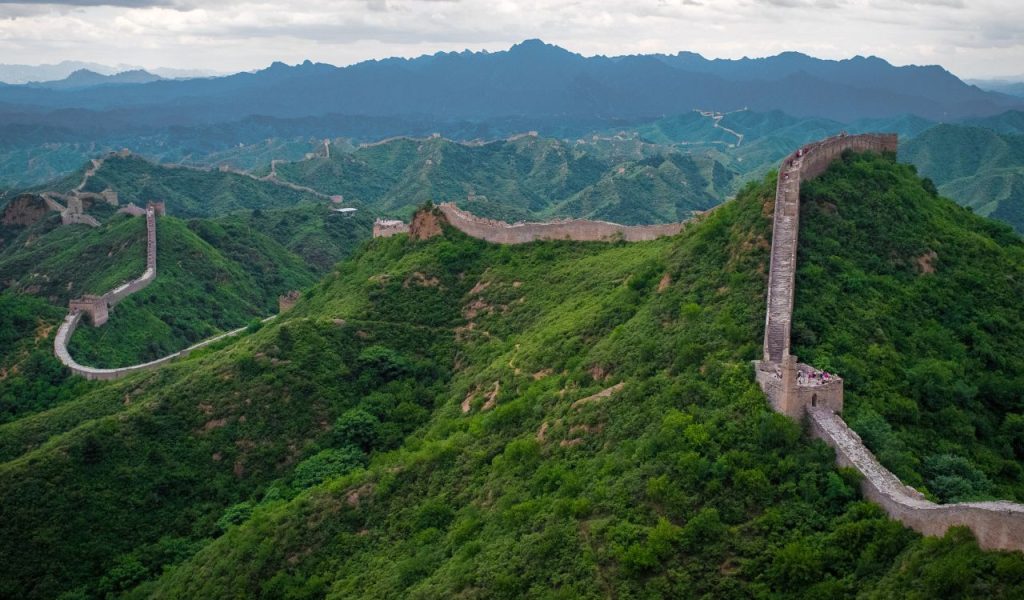
Stretching over 21,000 kilometers, the Great Wall of China represents adaptive engineering on a monumental scale. Built over many centuries, the wall was constructed using materials suited to each region: rammed earth in deserts, brick in plains, and stone in mountainous areas. This practical use of local materials reduced transportation challenges and optimized durability. The wall follows natural terrain to reduce effort and strengthen defense, while watchtowers and beacons enable fast communication across vast distances. Engineers study it as a model of terrain-adapted design, efficient resource use, and large-scale infrastructure planning.
4. The Brooklyn Bridge

When completed in 1883, the Brooklyn Bridge was the longest suspension bridge in the world and the first to use steel-wire cables. Its designers, John A. Roebling and Washington Roebling, implemented groundbreaking techniques that reshaped bridge engineering. Steel provided far greater tensile strength than iron, enabling longer spans and improved durability. The bridge used pneumatic caissons to build deep underwater foundations and featured redundant steel cables for greater stability and safety. Today, it is studied for its advanced tension systems, strong safety margins, and its groundbreaking shift from traditional materials to modern steel construction methods.
5. The Eiffel Tower

Completed in 1889, the Eiffel Tower demonstrated the power of mathematical modeling and structural optimization during the industrial age. Its iron lattice framework is carefully arranged to minimize material use while maximizing strength and resistance to wind loads. The tower’s curved silhouette reflects calculated wind pressure distribution rather than decorative styling. The bridge used pneumatic caissons for deep foundations and redundant steel cables for added stability and safety. It is studied for its advanced tension systems, reliable safety design, and its pioneering role in modern steel construction and large-scale bridge engineering innovation.
6. The Panama Canal
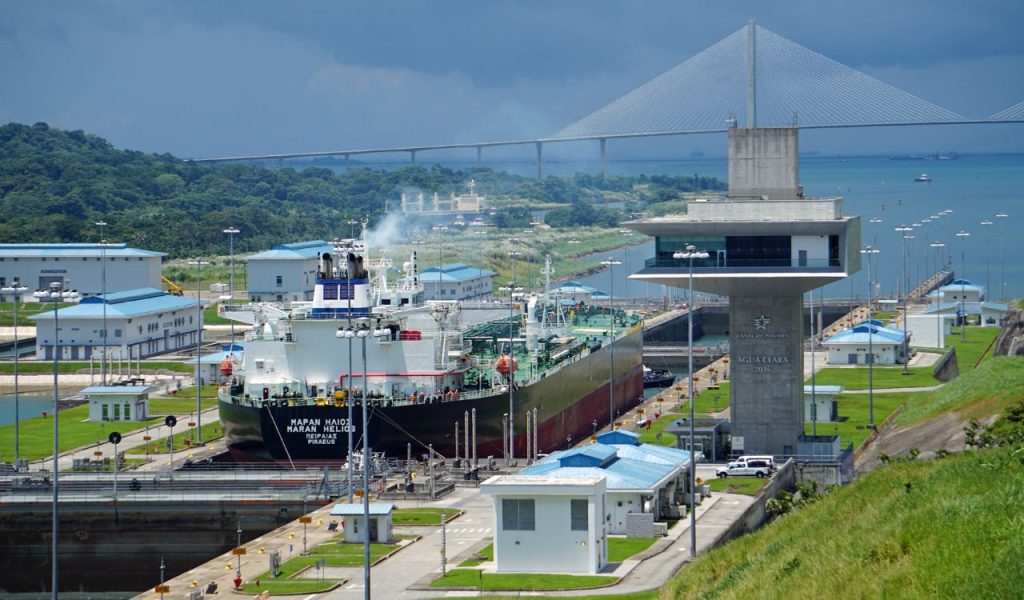
Opened in 1914, the Panama Canal transformed global trade by creating a shortcut between the Atlantic and Pacific Oceans. Rather than constructing a sea-level canal, engineers designed a lock-based system that lifts ships 26 meters above sea level to cross the continental divide. This solution overcame major geological and hydrological challenges. The canal required massive construction and major public health efforts to control disease. Today, it is studied for its engineering excellence and demonstrates how historic infrastructure can successfully adapt to growing modern demands and global trade needs.