You think you’ve seen every bizarre creature nature can pack into our world, but once you meet some of these animals, you might swear they were designed by a sci‑fi author. You’ll find marine oddballs that glow like neon signs, insects that resemble miniature aliens, and mammals with features so strange you’ll question reality. What’s fascinating isn’t just how weird they look, it’s how they survive and thrive in extreme habitats.
Some of these animals live deep in the darkest oceans. Others crawl across deserts or glide through rainforests. They defy what you expect from familiar life. By the end, you’ll be excited to explore more weird wonders of the natural world.
1. Goblin Shark
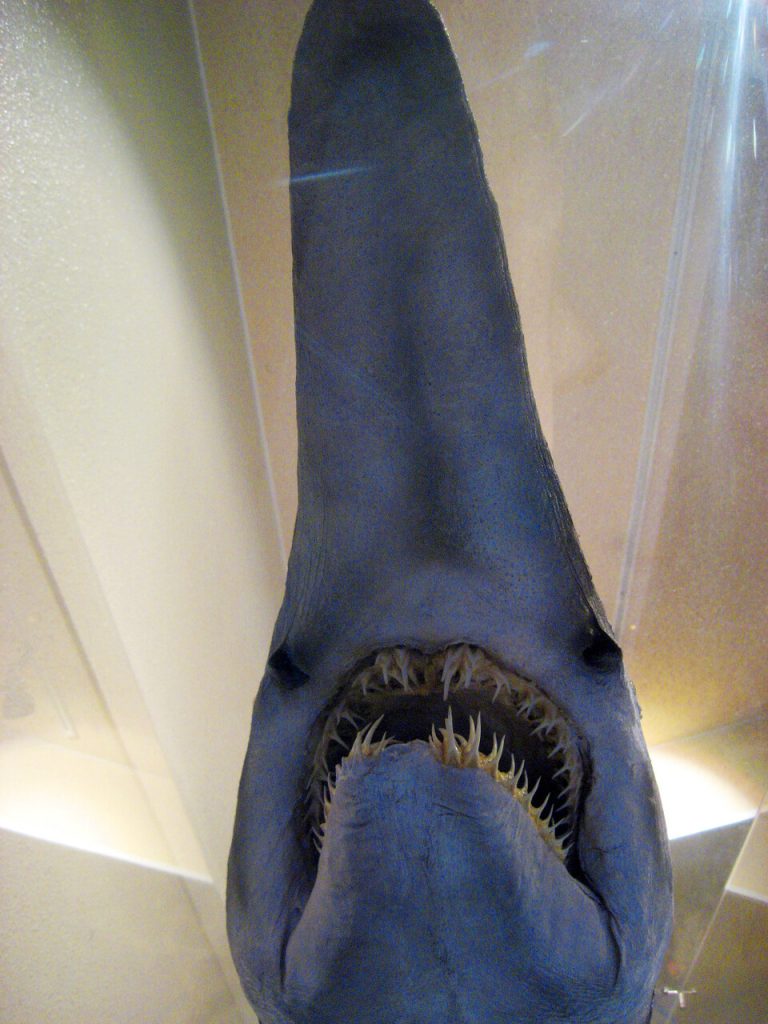
The goblin shark lurks in deep ocean darkness and looks like something from another planet. You won’t see this slender, pale shark near the surface. Its mouth protrudes in a frightening way when it hunts, as if it’s an alien probe.
Goblin sharks use their extendable jaws to snatch prey you’d never notice, like squid and fish drifting in the deep. You might think its long snout and tiny eyes make it awkward, but those adaptations help it sense electric fields and locate food. Scientists still know little about its behavior because it lives thousands of feet below the waves, where sunlight never reaches.
2. Axolotl
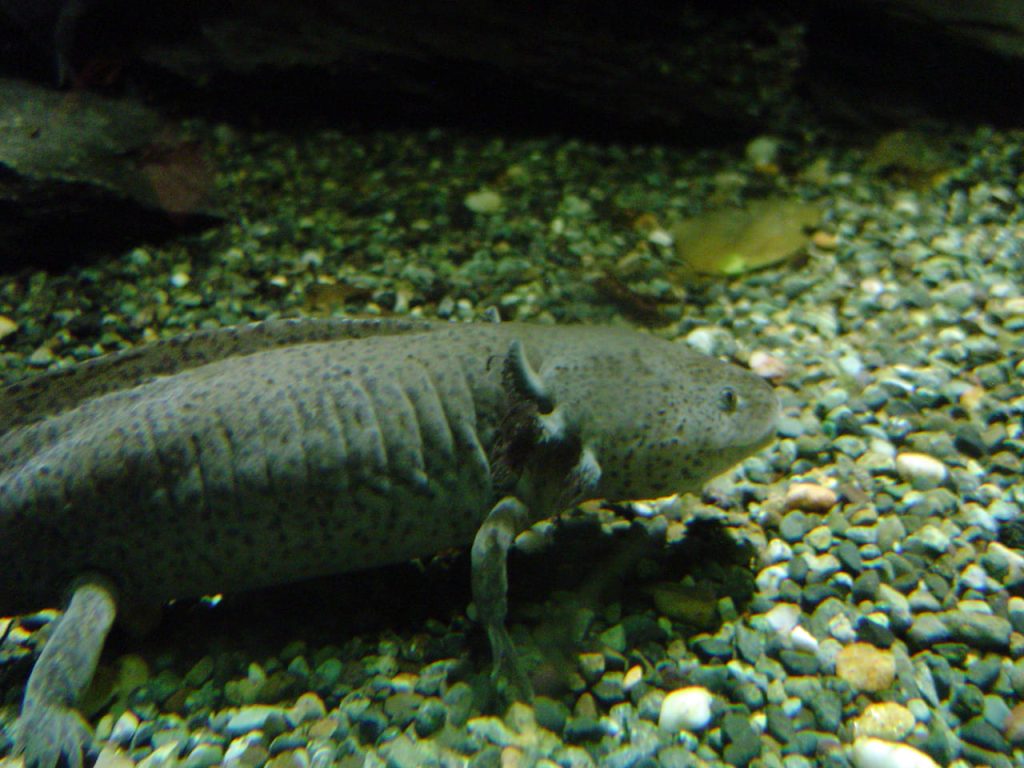
You’ll meet few animals as uncanny as the axolotl, a salamander that seems frozen in a juvenile stage forever. Unlike other amphibians, it never fully metamorphoses and keeps its feathery gills on the outside of its head. These look like soft tentacles waving gently in water.
Axolotls can regenerate lost limbs, parts of their heart, and even sections of their brain. That’s why researchers study them to understand healing and regeneration. In their native lakes near Mexico City, you can spot wild axolotls only rarely now, as habitat loss has made them critically endangered. Their strange, almost alien appearance makes them instantly memorable to anyone who sees them.
3. Leaf‑Sea Dragon
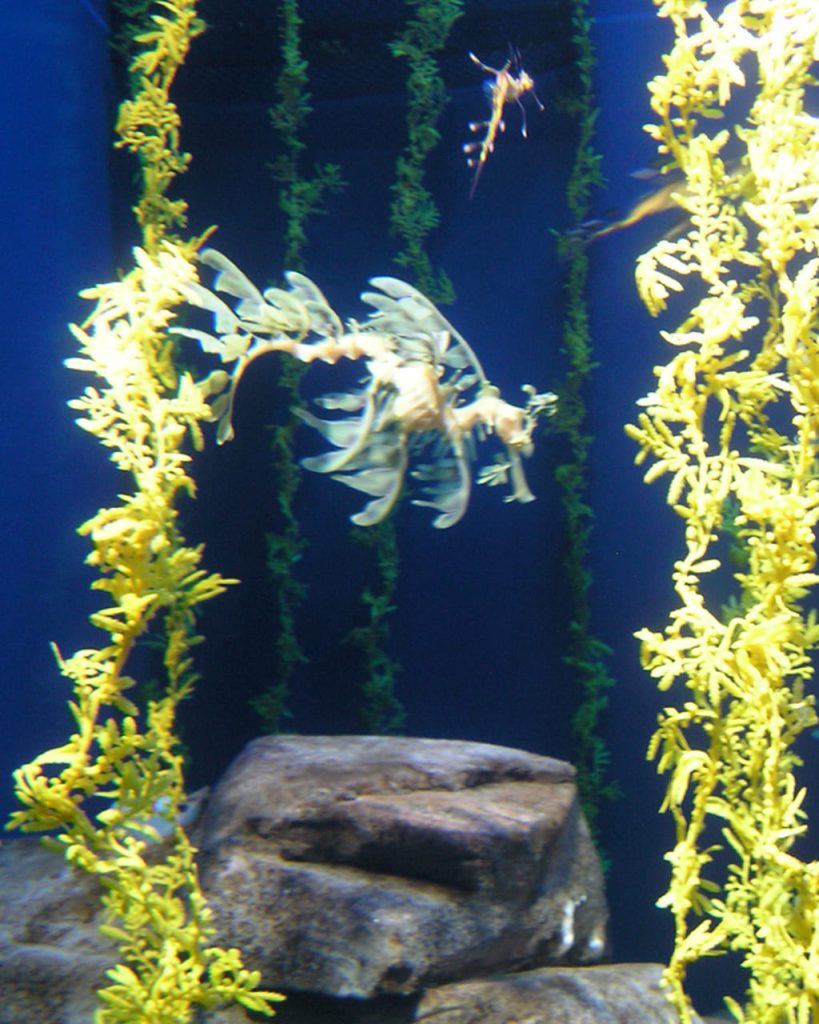
Float past a patch of seaweed and you might miss the leaf‑sea dragon entirely. This relative of the seahorse is covered in leaf‑like appendages that make it look like drifting vegetation. You’ll think you’re seeing a trick of light when one glides by, because it blends so perfectly with kelp and algae.
Leaf‑sea dragons feed on tiny crustaceans and use camouflage to avoid predators. While they seem fragile, they are strong swimmers and dedicated parents. In Australia’s southern waters, these creatures draw divers and photographers hoping to capture their surreal beauty under the waves. Their delicate, otherworldly appearance makes every sighting feel like a glimpse of a hidden fantasy world.
4. Tufted Deer
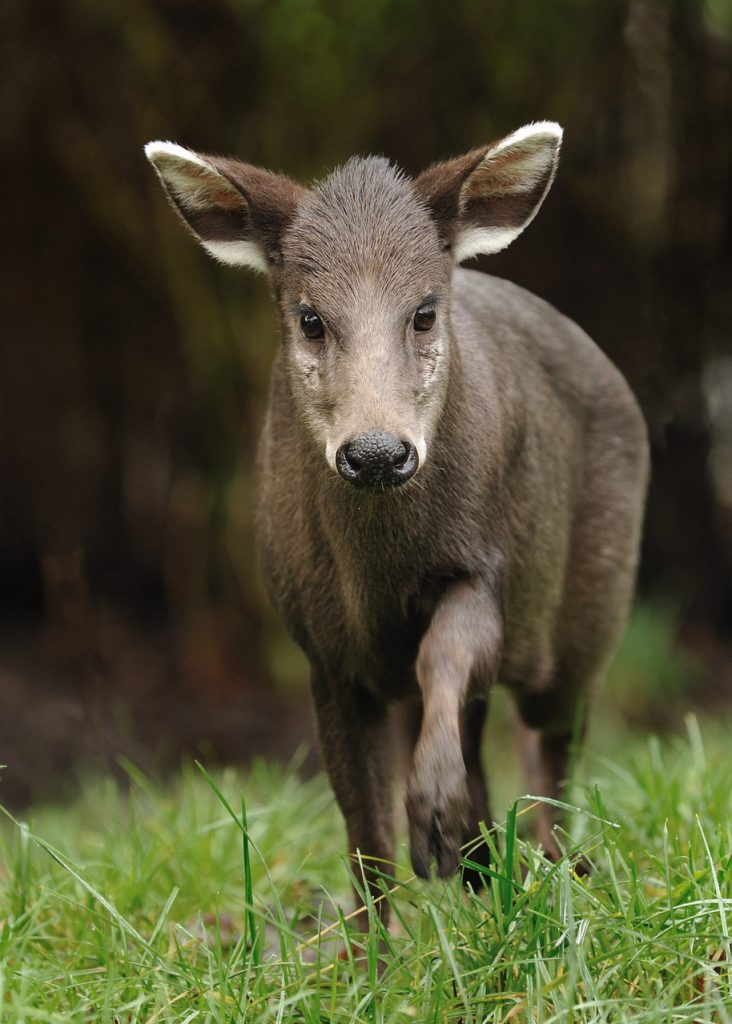
At first glance, the tufted deer seems like any woodland deer, until you notice the fang‑like teeth protruding from its mouth. Those sharp canines give it a look that makes you do a double take. These small deer live in forests in China, where they use their canine teeth in fights during mating season.
Their brown coats and small stature hide this unusual feature until you’re close. To you, it might seem like a creature from a fantasy realm rather than a real forest. Conservationists work to protect tufted deer as their habitats shrink from development and human activity. Its striking appearance makes you realize how many hidden wonders forests hold.
5. Japanese Spider Crab
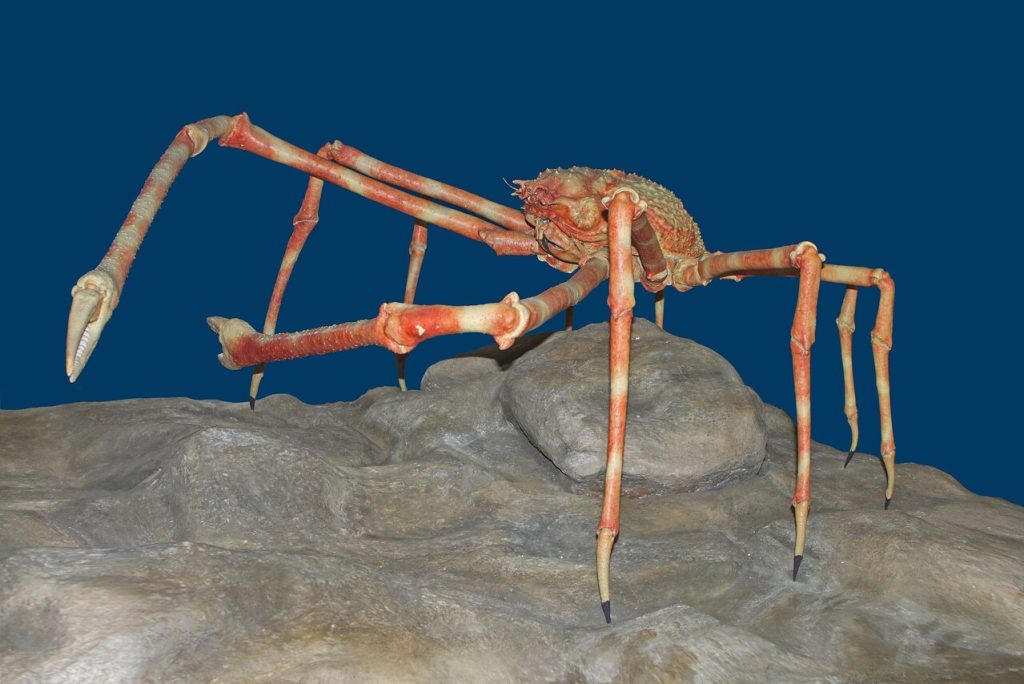
The Japanese spider crab holds the record for the longest leg span of any arthropod. With legs reaching up to 12 feet across, this crab looks like a mechanical creation more than a living animal. You might imagine it stalking the ocean floor like a giant robot, scuttling silently over rocks and reefs.
Despite its size, it feeds mostly on slow, bottom‑dwelling creatures and scavenges. These crabs live off Japan’s coast at depths where sunlight fades. Divers and researchers who encounter them describe a sense of awe at their sheer scale and delicate motion along the seabed. Its enormous legs and alien silhouette make it one of the ocean’s most unforgettable giants.
6. Glass Frog
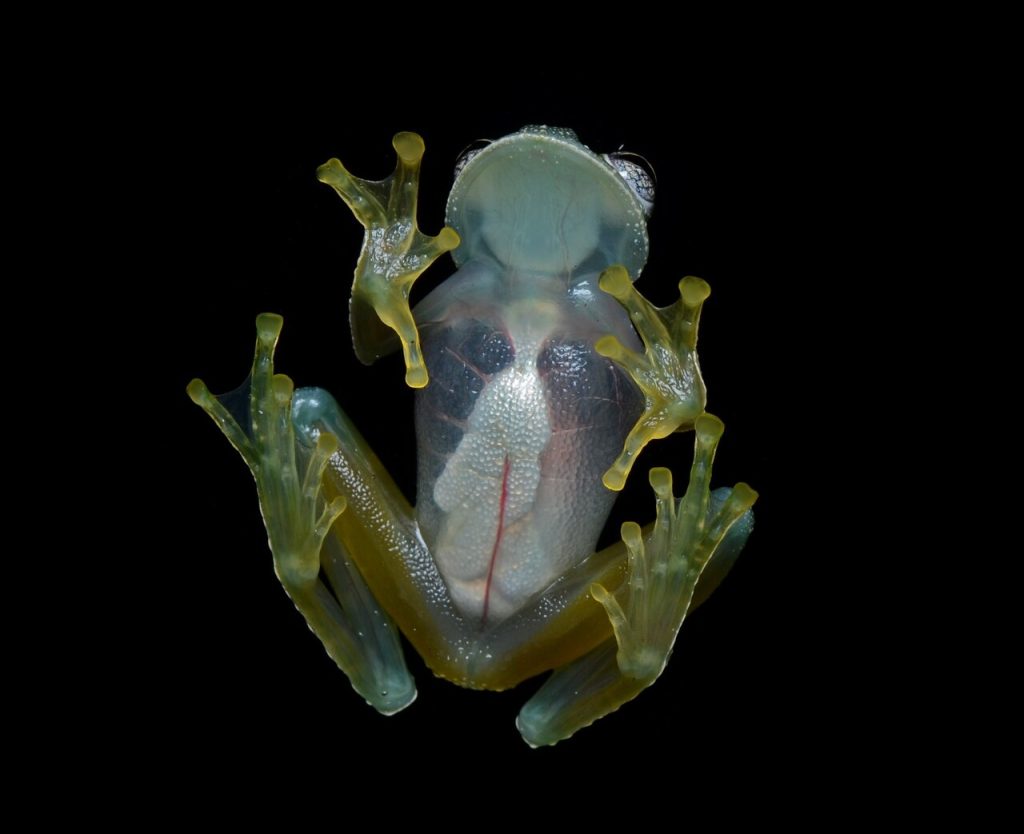
When you peek at a glass frog’s underside, you’re literally looking through its skin into its organs. These tiny amphibians have translucent flesh that shows a beating heart and internal structures. You’ll feel like you’re watching a biological x‑ray in motion.
Glass frogs live in Central and South American rainforests, usually near streams where they lay eggs on leaves over water. After hatching, the tadpoles drop into the stream below. Their see‑through bodies probably help them avoid predators by blending into dappled light among leaves and moss. This incredible transparency gives you a rare glimpse into the inner workings of a living creature.
7. Aye‑Aye
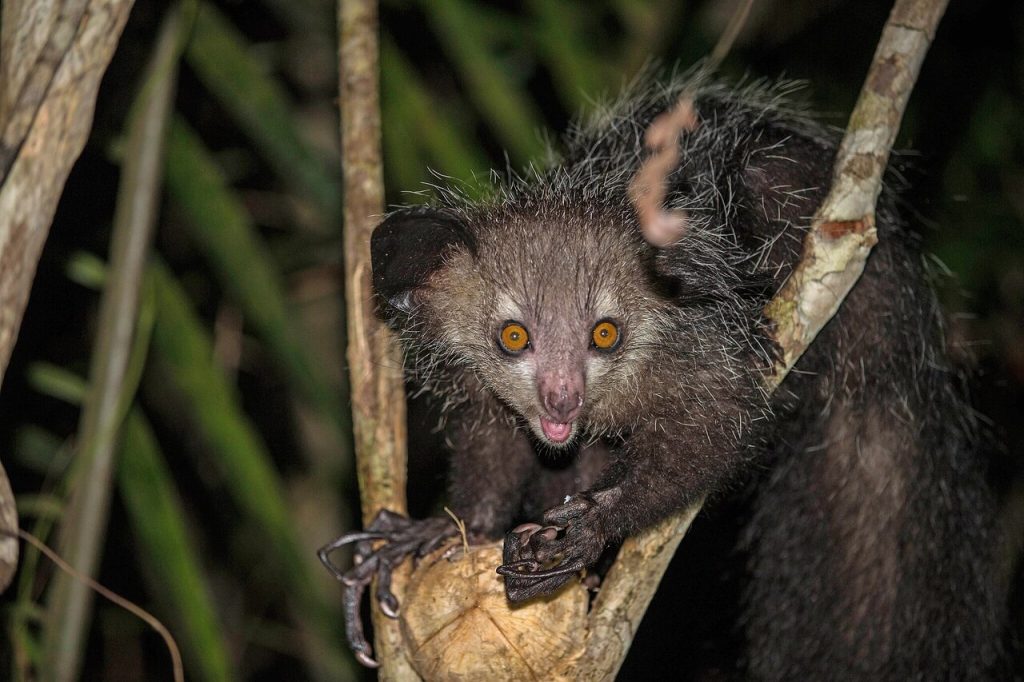
Madagascar’s aye‑aye might be the strangest primate you’ll ever hear about. It has huge eyes, bat‑like ears, and a skinny, elongated middle finger that it uses to tap on trees and extract grubs. You’d think this bizarre combo came from a comic book illustrator.
Aye‑ayes listen for hollow sounds in wood, then gnaw holes with sharp teeth before probing with that long digit. That hunting method is called percussive foraging. Locals once feared aye‑ayes, but conservation efforts now protect them as an important part of the island’s unique ecosystem. Its eerie appearance and unusual skills make it feel like a creature from another world.
8. Vampire Squid
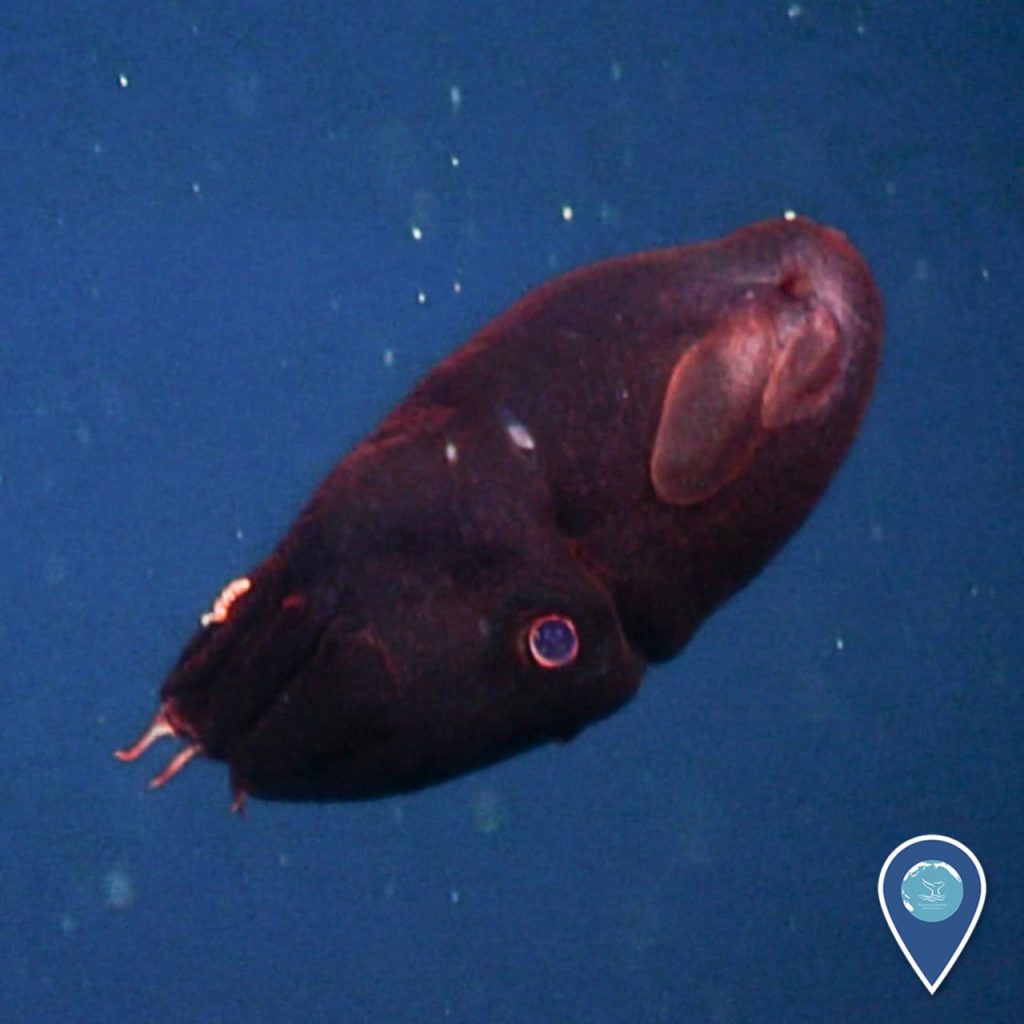
The vampire squid isn’t a squid or an octopus, though it carries traits of both. It lives in oxygen‑poor depths where few animals can survive. Its webbed arms and dark cloak‑like membrane give it a spooky, otherworldly silhouette. You might imagine it spreading its arms like a cape to drift through the abyss.
Despite the name, it doesn’t suck blood. Instead, it feeds on marine detritus, capturing tiny particles that sink from surface waters. Its ability to survive where others can’t makes it a marvel of deep‑sea adaptation and a favorite subject of oceanographers. Its ghostly glow and eerie movements make encountering one feel like stepping into a sci‑fi thriller.
9. Thorny Dragon
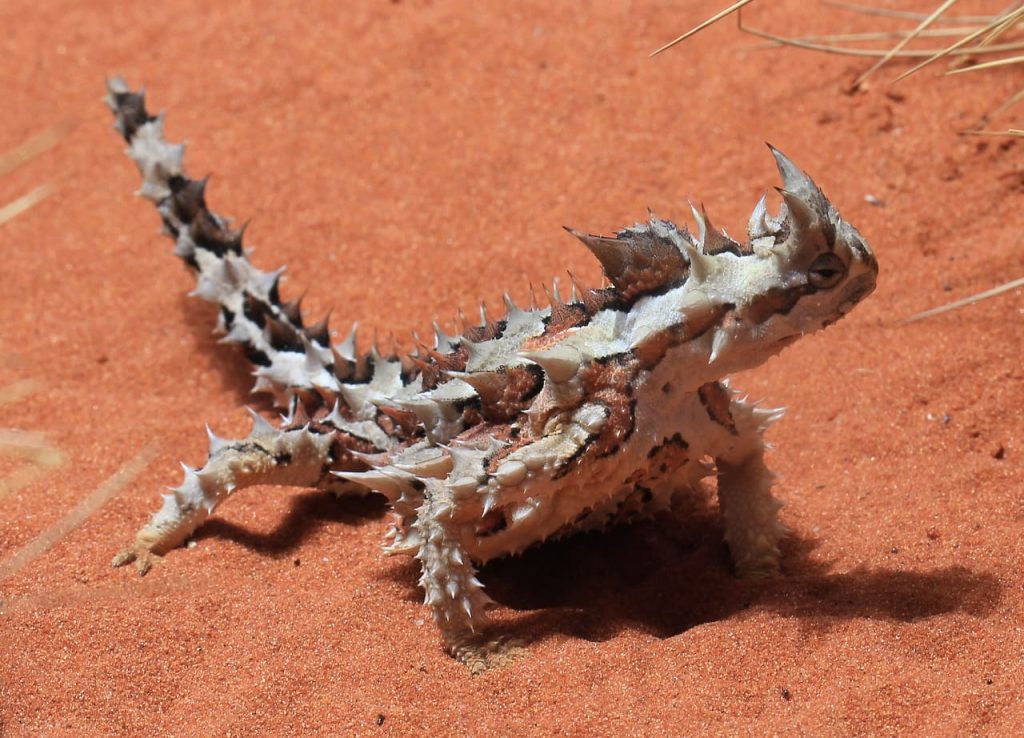
Walk across Australia’s desert and you’d be forgiven for thinking a piece of cactus came to life. The thorny dragon lizard’s body is covered in spikes that help deter predators and collect water. When dew or rain lands on its skin, tiny channels funnel moisture straight to its mouth. To you, this might seem like an engineered hydration system.
Thorny dragons feed on ants with a slow, deliberate gait that matches their harsh environment. By blending into sandy terrain, they keep hidden from threats while thriving where few reptiles do. Its spiky exterior and clever water‑collecting ability make it one of the desert’s most extraordinary survivors.
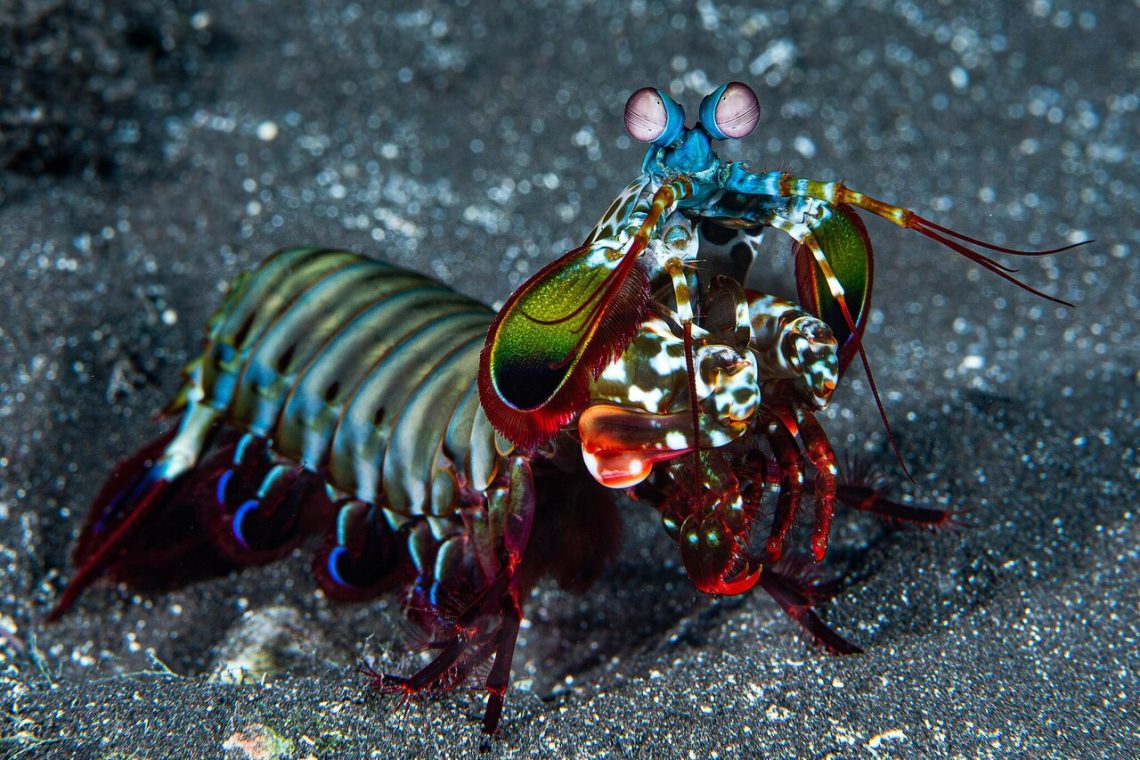
10. Mantis Shrimp
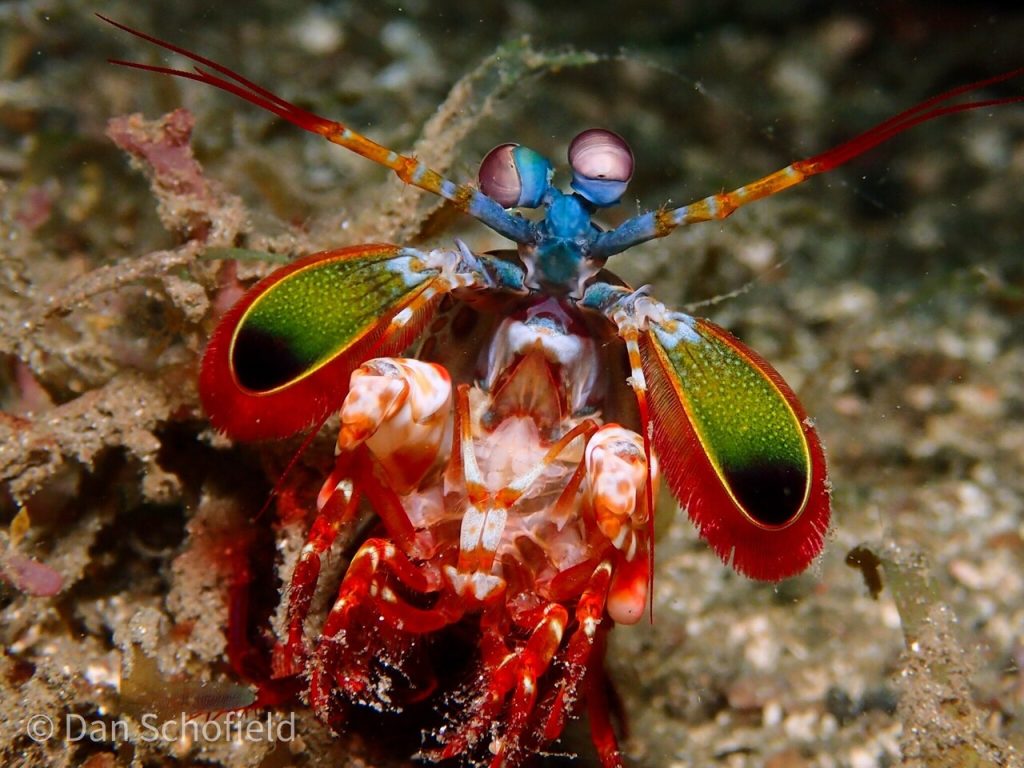
The mantis shrimp packs a punch quite literally. Its club-like front limbs strike with such speed they generate heat and light, a bit like tiny underwater explosions. You’ll read about this and wonder how a living creature can compete with physics.
These shrimp see colors humans can’t imagine, with eyes that detect polarized light. They use their powerful blows to crack shells and defend territory. For scientists, mantis shrimp are a reminder that evolution can produce tools and senses far beyond what we consider normal. Watching one hunt feels like witnessing a tiny creature with superpowers in action.