


School life in the 1980s existed in a world that felt both familiar and radically different from today’s classrooms. The rules were simpler, yet the punishments were often stricter and more direct, reflecting a culture that valued discipline, routine, and respect for authority above all else. Many of the disciplinary methods from that era seemed ordinary at the time because they were such a normal part of the school experience, accepted by teachers, parents, and students alike. Yet when we look back now, these practices feel surprisingly intense compared to modern standards, highlighting just how much attitudes about child behavior and emotional well-being have evolved over the decades.
1. Detention

Detention in the ’80s was a strangely universal rite, something students from nearly every school remember as if it were an unspoken tradition woven into childhood discipline. The moment a teacher announced that someone was staying after class, it created an unmistakable shift in the room’s atmosphere. The student knew they were in for a long stretch of stillness, sitting in a quiet classroom that felt nothing like the lively space it usually was. Time slowed dramatically; the clock seemed to move at a pace designed specifically to torture the restless mind. Students would stare at the wall, scribble absent-minded doodles, or pretend to work on homework just to make the moments pass. Teachers rarely spoke during detention, believing the silence itself was the lesson.
2. Lines

Writing lines was one of the most repetitive and mentally draining punishments of the ’80s, often assigned for talking out of turn, breaking rules, or ignoring directions. Teachers would instruct students to write sentences like “I will not disrupt the class” or “I will follow school rules” over and over until pages were filled with identical statements. By the time a student reached their fiftieth or hundredth line, their hand would ache, their wrist would burn, and their patience would be long gone. The punishment wasn’t physically harmful, yet the monotony created its own kind of psychological pressure. Sitting there, watching the same sentence form again and again, made students confront the behavior that put them there at least, which was the intended effect.
3. Hallway

Being sent to stand in the hallway was a punishment that mixed embarrassment with isolation in a uniquely effective way. When a teacher quietly pointed a misbehaving student toward the door, the message was unmistakable: you’ve crossed a line. Once outside, the hallway became a place where time seemed to stretch, and every passing student became a witness to the misstep that led there. The isolation wasn’t only physical but emotional; the student was removed from class activity, from conversations, from the comfort of being part of the group. Leaning against lockers or staring down polished floors, they could hear the muffled chatter and lessons on the other side of the door, reminding them that life inside the classroom moved on without them.
4. ParentCall

Nothing in the ’80s struck fear into a student faster than hearing a teacher say, “I’m going to call your parents.” This was a punishment that extended far beyond the confines of school because it crossed over into a child’s home life, a place where many parents took behavior and academics very seriously. The moment those words were spoken, anxiety washed over the student, who suddenly imagined every possible consequence waiting at home. The rest of the day became filled with dread, wondering whether the call had already been made or when it would happen. In an era of rotary phones and stern parental expectations, a call home meant a conversation that carried real weight.
5. CleanUp
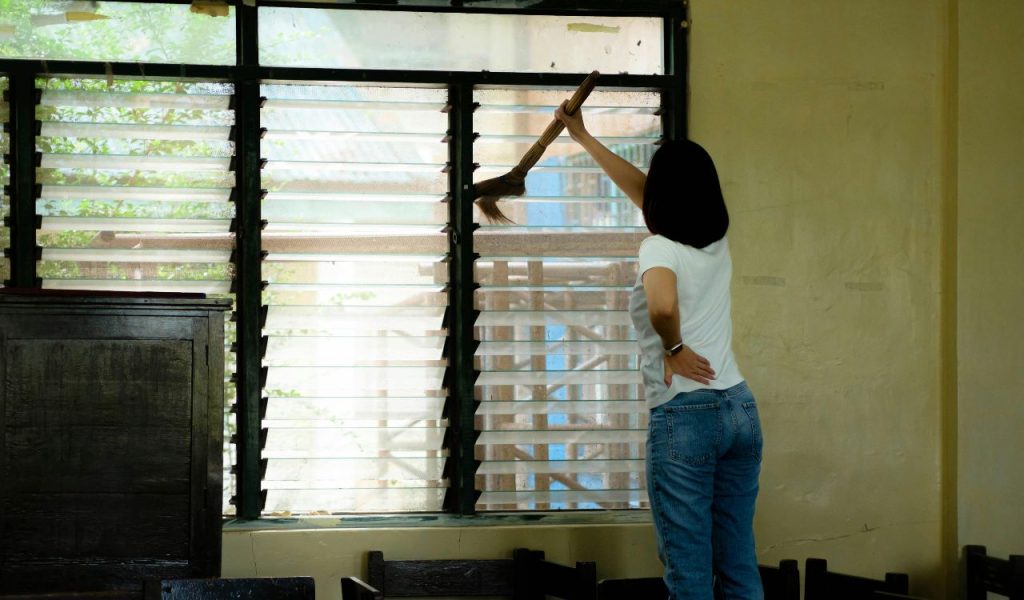
Cleanup duty was a punishment that blended responsibility with subtle embarrassment, making it a memorable consequence for many ’80s students. Assigned to those who created messes, disrupted class, or showed disrespect for shared spaces, the task involved cleaning desks, organizing bookshelves, wiping chalk trays, or straightening up cluttered corners of the classroom. What made it effective wasn’t just the physical labor but the symbolism: students had to repair the environment they disrespected. Some kids approached the task with frustration, dragging cloths across surfaces while grumbling under their breath. Others found it oddly soothing, though they would never admit it.
6. Exercise

Exercise as punishment in the ’80s was most common in gym classes or during sports practice, where discipline often took on a physical form. Students who talked back, didn’t follow instructions, or slacked off could quickly find themselves ordered to do pushups, laps, squats, or wall sits. Coaches emphasized toughness, believing physical exertion would correct attitudes and reinforce respect. While some students accepted this as part of school life, others dreaded the moment they heard the command to “drop and give me twenty.” The gym echoed with the sounds of sneakers squeaking, breath quickening, and bodies pushing past exhaustion.
7. Principal

Getting sent to the principal’s office was the pinnacle of ’80s school punishments, symbolizing the moment when minor misbehavior escalated into something more serious. The slow, dreaded walk through the hallway toward the office felt like a journey filled with self-reflection, fear, and regret. Students imagined every possible outcome—stern lectures, notes sent home, detention, or consequences that might follow them for weeks. Once inside the office, everything seemed more formal and intimidating: the large desk, the certificates on the walls, the neatly stacked paperwork, and the quiet authority of the principal sitting across from them.